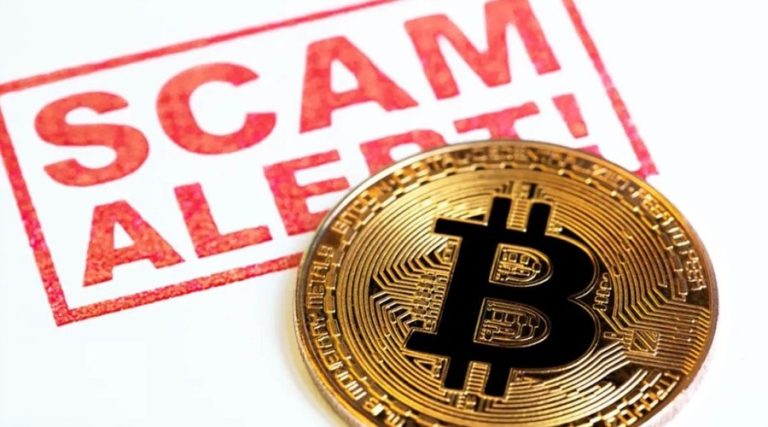
Expose scammer
Do you know what 0.5% daily compounded actually means?
Not ‘sounds nice.’ Not ‘seems reasonable.’ I mean: what does it *do* to $1,000 in 365 days — no withdrawals, no magic, just cold, unblinking arithmetic?
It becomes $6,168.
That’s a 517% annual return.
Now try 1% per day. Same starting amount. Same year. $1,000 → $37,783. A 3,678% gain.
And 3% per day? That’s where math stops being impressive and starts screaming fraud.
$1,000 × (1.03)365 = $142,299,707.
Over $142 million. In one year.
Let that sink in. Not ‘maybe.’ Not ‘if things go well.’ That’s the iron law of compound interest — no opinions, no disclaimers, no ‘market conditions.’ Just multiplication.
LABScon25 Replay promises returns that live somewhere between those numbers. You won’t find a whitepaper — you’ll find vague talk about ‘DeFi architecture,’ ‘smart contract synergies,’ and ‘next-gen liquidity layers.’ But none of that changes the math. If LABScon25 Replay were delivering even *half* of what its implied yield suggests — say, 2% daily — then $10,000 would become $13.8 million in a year. And yet they’re still asking you for your $100, $500, $5,000.
Ask yourself: if this worked, why isn’t the founder sitting on a private island funded by their own $1 million stake — left to compound quietly for five years?
Let’s calculate that too.
At 2% daily: $1,000,000 × (1.02)1825 (5 years) ≈ $2.4 × 10¹⁵. That’s $2.4 quadrillion.
Global GDP in 2024 is ~$105 trillion.
So yes — after five years, that single $1M investment would be worth more than 22 times the entire world economy.
No protocol. No token. No ‘revolutionary consensus mechanism’ can outrun physics, thermodynamics, or arithmetic. Markets are noisy, inefficient, and brutally competitive. Even Warren Buffett — arguably the greatest capital allocator of all time — averaged just under 20% per year over 50 years. The S&P 500: ~10%. A top-tier hedge fund: maybe 30%, in a good decade.
LABScon25 Replay doesn’t operate in ‘good decades.’ It operates in daily compounding fantasyland — where risk vanishes, liquidity never dries up, and every smart contract flaw gets patched before the hacker finishes typing ‘web3.eth.sendTransaction().’
And yet — $9 billion stolen across DeFi last year. $1.5 billion from Bybit alone. These aren’t accidents. They’re features of a system where complexity masks fragility, and where ‘innovation’ is often just obfuscation dressed in React UIs and Discord emojis.
You don’t need to audit their code to know LABScon25 Replay is fake. You just need a calculator and 90 seconds.
The investor’s chief problem — and even his worst enemy — is likely to be himself.
Benjamin Graham said that in 1949. He wasn’t warning about quantum-resistant cryptography or MEV bots. He was warning about the human impulse to believe the unbelievable — especially when it’s wrapped in jargon, urgency, and someone else’s ‘guaranteed’ gains.
LABScon25 Replay doesn’t need your money to survive. It needs your willingness to suspend disbelief — just long enough to click ‘Approve’ on that wallet connection.
Don’t. Not because it ‘might’ fail. Because it cannot succeed — not at the yields it implies. Not without breaking mathematics itself.
If you’ve already sent funds: act now. Revoke approvals. Freeze wallets. Report to authorities. But don’t wait for a ‘replay’ — there is no second chance in compounding scams. The clock started the moment you believed 3% daily was sustainable.
Real wealth builds slowly. Quietly. With patience, not promises. LABScon25 Replay offers none of those things — only a beautifully decorated trap built on exponentials that only work on paper… and only until the last person deposits.
So ask yourself — before you type another password, sign another transaction, or forward another link: What part of ‘$142 million from $1,000’ still feels like investing to you?