Expose scammer
Let me tell you about the Fake Crypto Girlfriend — not a person, not a platform with a real URL or license, but a script. A cold, rehearsed, emotionally calibrated script designed to make you forget your own name while it empties your bank account.
It starts when you’re quiet. When you haven’t texted back in three days because your car broke down *and* your shift got cut *and* your therapist’s waiting list is six weeks long. That’s when they slide into your DMs — warm, curious, ‘just happened to notice you liked my post.’ They remember your dog’s name from a three-word caption. They ask how your mom’s surgery went. They listen. And for the first time in months, you feel *seen*.
That’s Stage 1: vulnerability targeting. They don’t care about your politics or your playlist — they care about your emotional bandwidth. Low guard. High need. Perfect conditions for grooming.
Stage 2 is the slow burn. They send voice notes. Share childhood photos (stolen, of course). Talk about their ‘cousin who works at Binance’ or ‘uncle who coded smart contracts.’ Nothing pushy. Just… life. Real-feeling life. You start imagining weekend plans. You stop checking if their Instagram has 12 followers and zero posts before 2023.
Then comes Stage 3 — the pivot. ‘Oh hey, I’ve been using this little platform called Fake Crypto Girlfriend — super low risk, just $50 to start. My sister made $1,240 last month. Not life-changing, but it covered her phone bill.’ Casual. Offhand. Like mentioning the weather.
Stage 4? They send you a screenshot — grainy, slightly tilted, with a fake balance showing $1,247.32. You deposit $50. Two hours later? It’s $63.80. You grin. You screenshot it back. You feel *capable*. Hopeful. Connected.
That’s when Stage 5 hits: ‘My account’s capped at $5k right now — but if you top up to $2,500, we can both get the VIP withdrawal lane. Faster payouts. Lower fees.’ Your heart races — not from logic, but from the dopamine hit of being *chosen*, *trusted*, *included*.
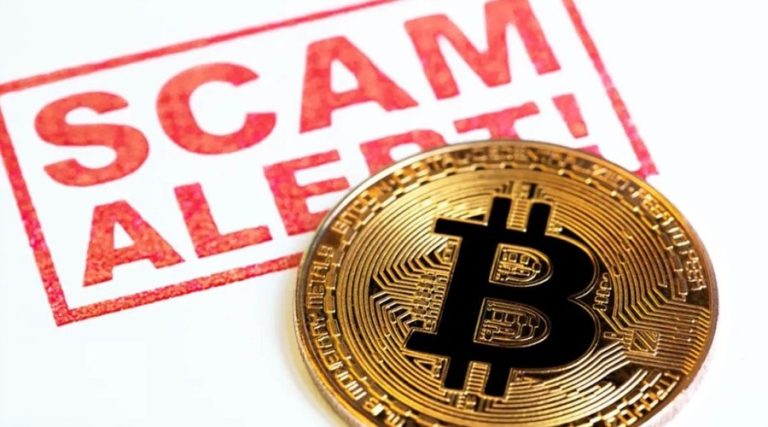
So you send $2,500. Maybe even $5,000. Because she said, ‘I’d never steer you wrong.’
Then Stage 6: ‘Oops — your account triggered a compliance flag. Just pay the $399 verification fee to unlock withdrawals.’ You pay. Then it’s $745 for ‘tax reconciliation.’ Then ‘your IP looks suspicious — need KYC upgrade for $1,200.’ And then? Silence. No more voice notes. No more ‘good morning, sunshine.’ Just an empty chat window and a bank statement screaming at you.
Here’s the math no one talks about: If that $2,500 had gone into an S&P 500 index fund instead — earning a realistic 7% annual return — in 10 years, it would be worth $4,917. Compound interest, quietly working. But Fake Crypto Girlfriend doesn’t want your patience. It wants your panic. Your loneliness. Your belief that love and money are somehow the same currency.
Remember this: ‘Show me the incentive and I’ll show you the outcome.’ — Charlie Munger. Their incentive isn’t your wealth. It’s your emotional dependency. Every ‘I miss your texts,’ every ‘you’re the only one who gets me,’ every ‘let’s build something real together’ — that’s the incentive. And the outcome? You lose money, yes — but worse, you lose trust in your own judgment. You start wondering if *you* were too gullible, too needy, too stupid. You weren’t. You were human. And they weaponized it.
This isn’t about crypto literacy. It’s about recognizing when affection is being used as leverage. Real people don’t pitch investments in love letters. Real partners don’t need you to ‘verify’ your account to prove you care. If someone you’re emotionally close to recommends an investment — especially one with no regulatory footprint, no whitepaper, no verifiable team — walk away. Block. Delete. Breathe.
You deserve love that doesn’t come with terms and conditions. You deserve safety that isn’t priced per screenshot. And you damn well deserve your rent money — intact, un-stolen, and yours.
If you’ve been hit by Fake Crypto Girlfriend, you’re not alone. You’re not dumb. You’re not broken. You were targeted — precisely because you’re kind, hopeful, and human. Now go change your passwords. Call your bank. And for god’s sake — talk to a real person, face-to-face, about what happened. Not to fix it — but to remember who you really are.