Expose scammer
Let me be blunt: WAR Report is not a trading platform. It’s not a bot. It’s not even a company. It’s a fake label slapped onto a crypto scam that preys on people who’ve heard the phrase ‘quant strategy’ and assumed it means ‘guaranteed money.’
What Is WAR Report Supposed To Be?
According to the materials floating around — yes, the same ones that mention Afghanistan, Iraq, and SPY volatility — WAR Report positions itself as a ‘geopolitical volatility arbitrage system.’ Translation: ‘We predict market moves during wars and profit from them using AI.’
Except there’s zero evidence of live trading. No verified on-chain wallet showing consistent deposits and withdrawals. No public API feed. No third-party audit. Just screenshots of green numbers, a vague reference to Stephen J. Massocca (a real financial commentator — who has never endorsed this), and a $100 billion Bush-era budget footnote used like it’s proof of algorithmic genius.
The Math Doesn’t Lie — And It Screams Fraud
They don’t say it outright in the brochure — but the implied return model is classic scam math: 1–2% daily.
Let’s do the math — no jargon, just dollars:
If you deposit $500 and earn 1.5% every single day, compounded:
→ After 30 days: $500 × (1.015)³⁰ = $780
→ After 90 days: $500 × (1.015)⁹⁰ = $1,920
→ After 180 days: $500 × (1.015)¹⁸⁰ = $7,360
That’s a 1,372% return in six months. For comparison: Renaissance Technologies’ Medallion Fund — arguably the most successful quant fund ever — averaged ~66% annualized before fees over decades. And they run 10,000+ servers, employ Nobel laureates, and don’t accept retail investors at all.
If WAR Report’s ‘bot’ could really do this, they wouldn’t be begging for $500 deposits. They’d be raising $5 billion from pension funds — and charging 2% + 20%. Instead, they’re asking you to send USDT to an untraceable wallet and pray their ‘dashboard’ updates.
No Bot. No Strategy. Just Rocks — And You’re Not Turning Enough
Here’s what Ray Dalio nailed: ‘The biggest mistake investors make is to believe that what happened in the recent past is likely to persist.’
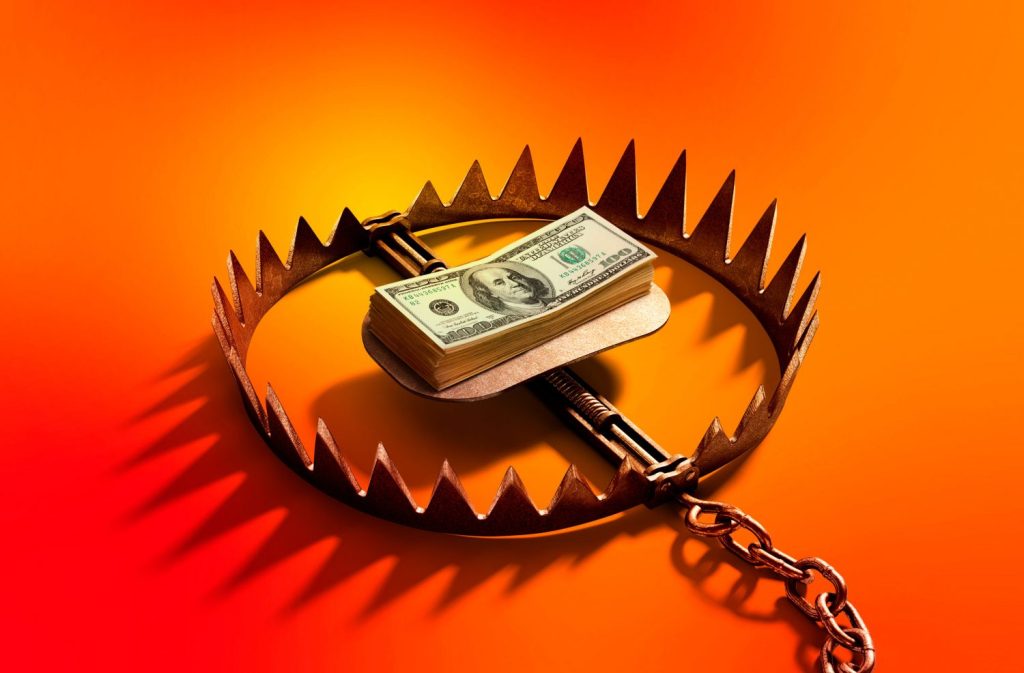
They show you one chart — October 10, 2001 — where markets spiked +2.3%. Then they act like that’s a repeatable edge. It’s not. It’s noise. It’s history dressed up as alpha.
Real quant trading doesn’t work on headlines. It works on microsecond latency, order book depth analysis, cross-asset correlations, and statistical significance across millions of data points — not three war dates cherry-picked from 2001.
Which brings us to Peter Lynch: ‘The person that turns over the most rocks wins the game. And that’s always been my philosophy.’
So let’s turn over a few rocks:
- No domain registration info — the site (if it even exists) is parked or hosted on anonymous services.
- No KYC. No compliance. No SEC or FCA filing — not even a ‘we’re not regulated’ disclaimer.
- No working demo account. No historical trade log with timestamps and exchange IDs.
- Every ‘proof’ is a static image — easily faked in Excel.
This Is Not Investing. It’s Theft With a PowerPoint.
You won’t get rich. You won’t get paid. You won’t even get a response after your first withdrawal request.
They’ll blame ‘KYC delays,’ ‘network congestion,’ or ‘geopolitical instability’ — ironic, given their whole brand is built on war volatility.
I’ve watched too many friends lose life savings to scams that sound smart until you ask two questions: Where’s the money moving? and Who actually profits? In WAR Report’s case — the only movement is your crypto into their wallet. The only profit is theirs.
If you’re reading this before sending money: stop. If you’ve already sent money: document everything, file with your local financial authority, and assume it’s gone. Real trading doesn’t hide behind wartime nostalgia and fake volatility charts.
Turn over the rock. Look under it. Then walk away — before they ask for more.